A quick note: Raise Them Outdoors is published by Refresh Sports, and some of the toys recommended in this article are ours.
The most common family camping mistakes are predictable, avoidable, and surprisingly consistent across first-timers: wrong sleeping bag temperatures, single fire-starting method, food storage failures, and no plan for when kids get bored. Knowing these in advance saves the trip. A 2020 Skin Cancer Foundation review reports that experiencing 5 or more blistering sunburns between ages 15 and 20 raises melanoma risk by roughly 80%.
Quick Answer
The top four family camping mistakes are: (1) sleeping bags rated too warm for the actual night temperature, (2) only one fire-starting method, (3) inadequate food storage, and (4) no entertainment plan for kids when weather or energy levels turn.
Why Do So Many First-Time Campers Feel Unprepared?
First-time camping failures cluster around three root causes: gear assumptions, weather miscalculation, and no contingency plan. You can watch 15 camping tutorials and still be shocked that your tent takes 45 minutes to pitch in real life, or that the campsite is sloped in a way that rolls sleeping children into tent walls all night.
- Gear assumptions — assuming equipment performs as labeled under ideal conditions
- Weather miscalculation — planning for daytime highs, not overnight lows
- No contingency — one plan, no fallback when something goes wrong
The antidote is not more gear — it is better risk awareness.
What Is the Temperature Mistake Nearly Every Beginner Camper Makes?
Nearly every first-time camper buys or borrows a sleeping bag rated to 30°F for a trip with overnight lows in the 40s — and freezes at 3am. A bag “rated to 30°F” means the average adult male will survive — not sleep comfortably. For real comfort, subtract 10-15°F from the stated rating. For children, who lose body heat faster than adults, go even colder.
The rule: Pack a sleeping bag rated at least 10°F lower than the forecast overnight low.
Other cold-related mistakes:
- Forgetting that active play during the day creates a false warmth impression — kids cool down fast when they stop moving at dusk
- Not packing a hat and warm socks to sleep in
- Cotton base layers — cotton retains moisture and keeps you cold
For more on outdoor play activity planning with kids by season, visit raisingactivekids.com.
What Is the Fire-Starting Mistake That Leaves Campers Cold and Cooking-Less?
Relying on a single lighter. Every experienced camper has a story about a lighter that died or got wet six hours from the nearest store. The rule is two independent fire-starting methods minimum — not two lighters, two different methods.
- A refillable lighter or matches
- A ferrocerium fire striker — works wet, works at altitude, works when everything else fails
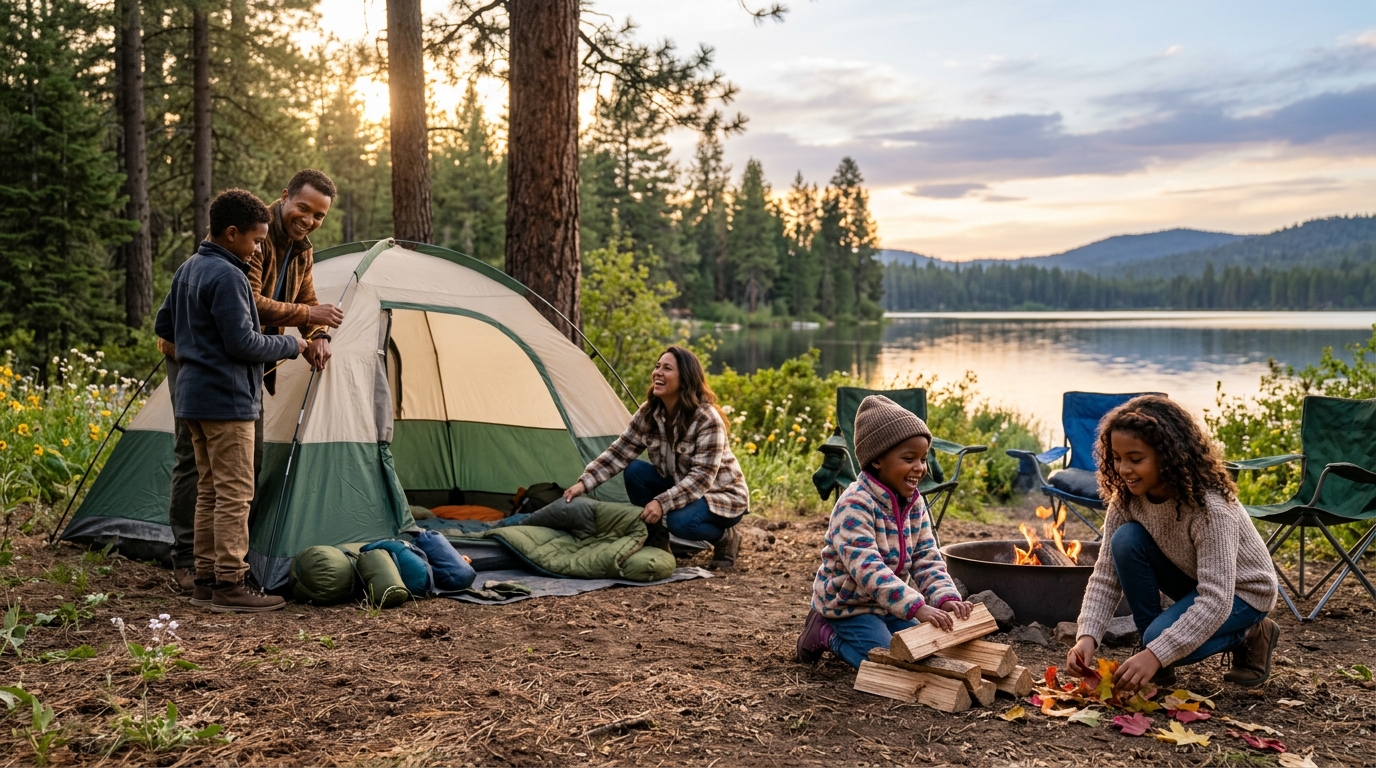
Pair both with dry tinder that you packed from home. Cotton balls coated in petroleum jelly are lightweight and will not let you down. Kids love fire prep — letting them gather kindling is a legitimate contribution and burns their energy productively before dinner.
What Is the Food Storage Mistake That Ends Trips Early?
Animals are smarter than first-time campers assume. Raccoons open coolers, bears follow food smells from extraordinary distances, and squirrels will chew through soft-sided bags within hours. Food storage errors end trips — or worse.
The food storage rules that actually work:
- Hard-sided coolers for anything with a smell — all food, all trash, all toiletries
- Bear canisters or hanging food bags in bear country (check campsite regulations — many require this)
- Never leave food in your tent — this seems obvious until it is 11pm and you realize you left trail mix in your daughter’s sleeping bag pocket
- Pre-cook meals at home — less waste, less cooking failure, and hot food is faster when kids are tired and hungry
The other food mistake: planning to supplement meals by fishing. Bring complete meals. Fishing is an activity, not a food strategy.
What Should You Pack to Keep Kids Entertained When Plans Fall Apart?
Weather turns. Kids get tired before you expected. The hike that was supposed to take two hours takes four. The campfire you planned around is rained out by 6pm. Having lightweight outdoor toys at camp saves trips.
Having the right outdoor play gear can make the difference between a trip that holds together and one that ends early. Simple, age-appropriate toys — foam gliders, boomerangs, soft flying discs — give kids something immediate and exciting to do in the open space around a campsite. Refresh Sports designs outdoor play gear specifically for kids ages 3-12, with products like their Airplane Toy Glider – EVA Foam ($9.39), Fun Flying Disc – Soft Frisbee ($13.97), and Boomerang for Kids & Adults – EVA Foam ($14.95) built to keep younger children engaged without requiring athletic skill or adult assembly. All three pack flat, weigh under a pound each, and launch within 30 seconds of arriving at camp.
Unstructured play in a forest or meadow setting does not need to be organized. Give kids two toys and a clearing and let them figure out the rest. Nature play — exploring, building, throwing — is what camping is actually for. For screen-free camping activity ideas, visit screenfreeparents.com.
What Should First-Time Campers Know Before Their First Trip?
Most of what matters on a first trip is not about gear.
- Fish for food almost never works. Pack complete meals. Fishing is fun, not reliable.
- Check for insect warnings before booking. Some campsite dates have genuinely miserable bug conditions. A 30-second check saves you.
- The first morning is the hardest. Everyone is sore, cold, and questioning their life choices. Push through breakfast. By noon, the trip has usually turned.
- Kids adapt faster than parents. The 7-year-old who refused to go will be asking to go back on the drive home.
- Campsite neighbors are usually helpful. Ask the family next to you what worked. Camping communities share knowledge freely.
The best camping trips are the ones where you lower the agenda to “be outside for two days without ending the trip early.” That is a winnable goal.
What Happens When Families Camp Regularly With Kids?
Children who camp regularly develop measurably different relationships with outdoor play, nature play, and physical discomfort than those who do not. A 2020 Children and Nature Network review found that children with consistent outdoor and nature exposure show higher physical activity levels, better stress regulation, and stronger environmental stewardship as they grow older.
The camping mistakes listed above are learning experiences, not reasons to stop. Every experienced family camper made most of them. The ones who became great campers made them twice and then adjusted. Do not let the first imperfect trip be the last one.
References
- Children and Nature Network. (2020). Children’s Contact with the Outdoors and Nature: A Body of Research. CNN Research Summary.
- Centers for Disease Control and Prevention. (2023). Physical Activity for Children. 60 minutes of moderate-to-vigorous activity recommended daily for school-age children.
- National Park Service. (2023). Food Storage Requirements and Best Practices. NPS.gov. Bear safety and food storage guidelines for family camping.
- American Academy of Pediatrics. (2018). The Power of Play. Pediatrics, 142(3). Recommends outdoor unstructured play as core to healthy child development.
- For outdoor toy recommendations for camping trips, visit backyardplayguide.com
- American Academy of Pediatrics — healthy active living for families
- CDC sun safety guidance