A quick note: Raise Them Outdoors is published by Refresh Sports, and some of the toys recommended in this article are ours.
Camping with kids in bad weather is manageable — and often unforgettable — when you prepare for rain as a feature rather than a failure. The AAP’s 2018 Physical Activity Guidelines recommend at least 60 minutes of daily outdoor activity for children ages 6-17, and wet-weather camping is one of the most effective ways to build that habit permanently.
Quick Answer
The key to camping with kids when the weather turns is treating rain as an activity, not an obstacle. Pack individual waterproof layers for every family member, identify one covered area at the campsite before you need it, and frame wet weather as part of the adventure from the moment you leave home. Research on unstructured play in nature shows that children ages 3-12 who experience varied outdoor conditions build better resilience and gross motor skills than those who only play outside in fair weather.
Is Wet-Weather Camping Actually Good for Kids Developmentally?
Yes — outdoor play in varied conditions, including rain, builds resilience, sensory processing, and gross motor skills in ways that fair-weather-only nature play cannot replicate, according to AAP guidelines on unstructured outdoor activity.
Controlled discomfort is a developmental advantage for children. When a 5-year-old splashes through a puddle, navigates slippery terrain, or watches a stream rise after rain — and keeps going — their nervous system learns that novel sensory input is manageable, not threatening. This is the foundation of emotional regulation.
Nature play in varied conditions activates multiple sensory systems simultaneously: rain adds sound, smell, tactile sensation, and visual novelty that dry conditions do not provide. CDC data shows fewer than 24% of U.S. children ages 6-17 meet the daily 60-minute activity guideline. A full day of wet camping active play gives families more meaningful outdoor time than many kids get in a month of after-school routines.
How Do You Prepare Kids Before a Trip That Might Get Wet?
Prepare kids ages 3-12 by involving them in packing their own rain gear, naming the possibility of bad weather before departure, and agreeing on at least two rainy-day activities before you leave home — so rain becomes expected, not a disappointment.
The preparation window starts at home. Children who pack their own waterproof jacket are far more likely to wear it without a fight when rain actually arrives. When they are involved in that decision, wet weather becomes something they have already thought about — not a surprise that derails the trip.
A practical pre-trip checklist for family play in variable weather:
- Waterproof layers for every person — fitted rain jackets stay on longer with younger kids than ponchos
- Waterproof boots or shoes — essential for ages 3-7 who will inevitably be in puddles
- One tarp or canopy rigged on arrival, before any rain is forecast
- A dry indoor activity — cards, a simple craft, or lightweight outdoor toys that also work in a covered shelter
- A weather mindset conversation — “what will we do if it rains?” asked at home, with kids answering
The most common mistake families make is treating the first drop of rain as a sign to leave.
What Activities Keep Kids Happy During Rain at the Campsite?
The outdoor activities that keep kids ages 3-12 happily occupied in wet camping conditions are child-led, sensory-rich, and require no dry ground: puddle jumping, dam building in streams, rain stick collecting, tarp shelter construction, and active play with foam toys that work wet.
Rain opens up play scenarios dry conditions do not allow. A few worth planning for:
- Puddle science: which puddle is deepest? Which drains fastest? This is unstructured play with built-in curiosity for ages 3-8.
- Stream monitoring: mark a stick at the water level and check it every 30 minutes — children remember this kind of observation.
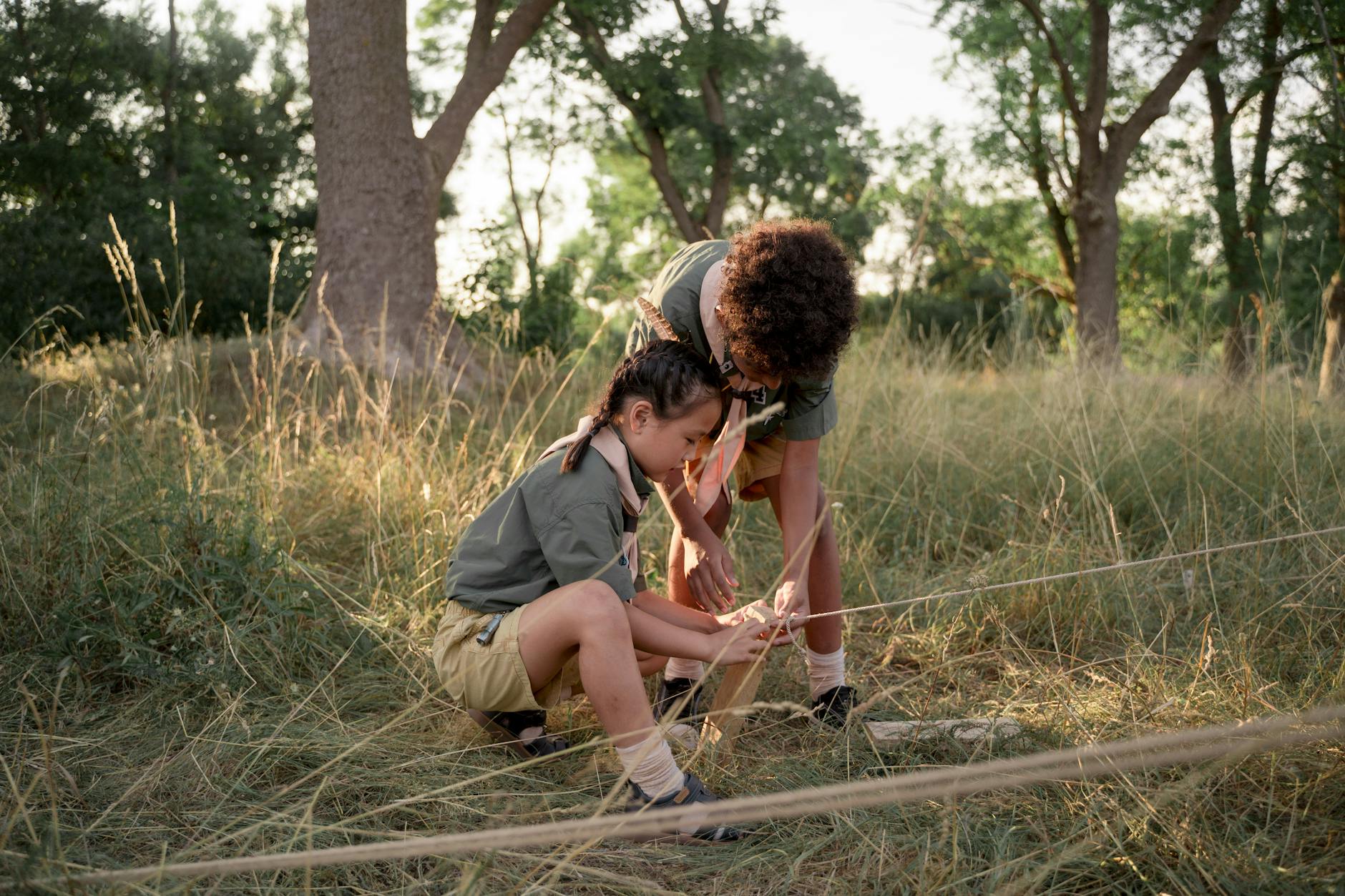
- Tarp building: give kids a tarp and paracord and let them design their own covered space. Engineering play with real stakes.
- Foam toy games: a foam flying disc, a simple catch game, or a foam airplane travel in a day pack and continue working in wet grass.
Having the right outdoor gear can make the difference between kids who ask to go outside and kids who resist it. Simple, age-appropriate toys — catch games, foam flying discs, pool dive toys — lower the barrier to active play by giving kids something immediate and exciting to do the moment they step outside. Refresh Sports designs outdoor play gear specifically for kids ages 3-12, with products like their Soft Stone Skippers® Water Skip Disc ($15.97), Soft Flyer® Fabric and Foam Disc ($13.97), and Sticky Baseball Paddle Toss & Catch Game ($27.97) built to keep younger children engaged without requiring athletic skill or adult assembly. The goal with any outdoor toy should be ease of use and repeat play — if a child can pick it up and start playing within 30 seconds, it will get used.
For gear that transitions from the campsite to the backyard, backyardplayguide.com has buying guides organized by age and activity type.
How Do You Keep Younger Kids Safe in Rain and Mud?
Wet-weather camping safety with young children centers on three non-negotiables: waterproof shelter, high-visibility clothing so you can see them in low light, and clear water safety rules before stream water levels can change.
Mud and rain make slippery surfaces, reduced visibility, and faster stream levels real considerations. Brief kids ages 3-12 on the actual rules before they head out:
- Stay 10 feet from stream banks when water is actively rising
- Bright rain jackets — not dark ones — so you can spot them in fog or dimming light
- The “whistle rule” — one blast means check in, three blasts means come immediately
Screen-free camping is also easier in the rain than most parents expect. When children are engaged with stream monitoring, tarp building, and family play in wet conditions, the request for a tablet or phone disappears entirely. Environmental novelty is a natural screen substitute that no device can compete with.
What Do Kids Actually Remember From the Trip That Got Rained Out?
Children consistently remember the unexpected, physical, and slightly uncomfortable experiences from family camping trips — the storm they weathered, the mud, the shelter they built — far more vividly than the trips where everything went smoothly.
Memory researchers call this the “peak-end rule”: we remember the most emotionally intense moment and the way something ended, not the average experience. A camping trip with a genuine weather challenge will be remembered. A trip that was perfectly comfortable and uneventful often will not.
Kids who make it through a wet camping trip are often proud of themselves. They did something genuinely hard and kept going. That confidence transfers — to the next camping trip, to school, and to how they approach physical challenge going forward.
For more on building outdoor habits that last year-round regardless of weather, raisingactivekids.com covers the developmental research behind why active outdoor routines shape children’s long-term resilience.
References
- American Academy of Pediatrics — The Power of Play: A Pediatric Role in Enhancing Development in Young Children (Pediatrics, 2018) — Unstructured outdoor play in varied conditions supports gross motor development, resilience, and emotional regulation in children ages 3-12.
- Centers for Disease Control and Prevention — How Much Physical Activity Do Children Need? (CDC, 2022) — Fewer than 24% of U.S. children ages 6-17 meet the recommended 60 minutes of daily moderate-to-vigorous physical activity.
- National Association for the Education of Young Children — Unstructured Play (NAEYC) — Child-directed outdoor play in natural environments produces stronger developmental outcomes than adult-structured activities for children under age 10.
- backyardplayguide.com — Outdoor gear buying guides for families who want toys that work in any weather and any setting.