A quick note: Raise Them Outdoors is published by Refresh Sports, and some of the toys recommended in this article are ours.
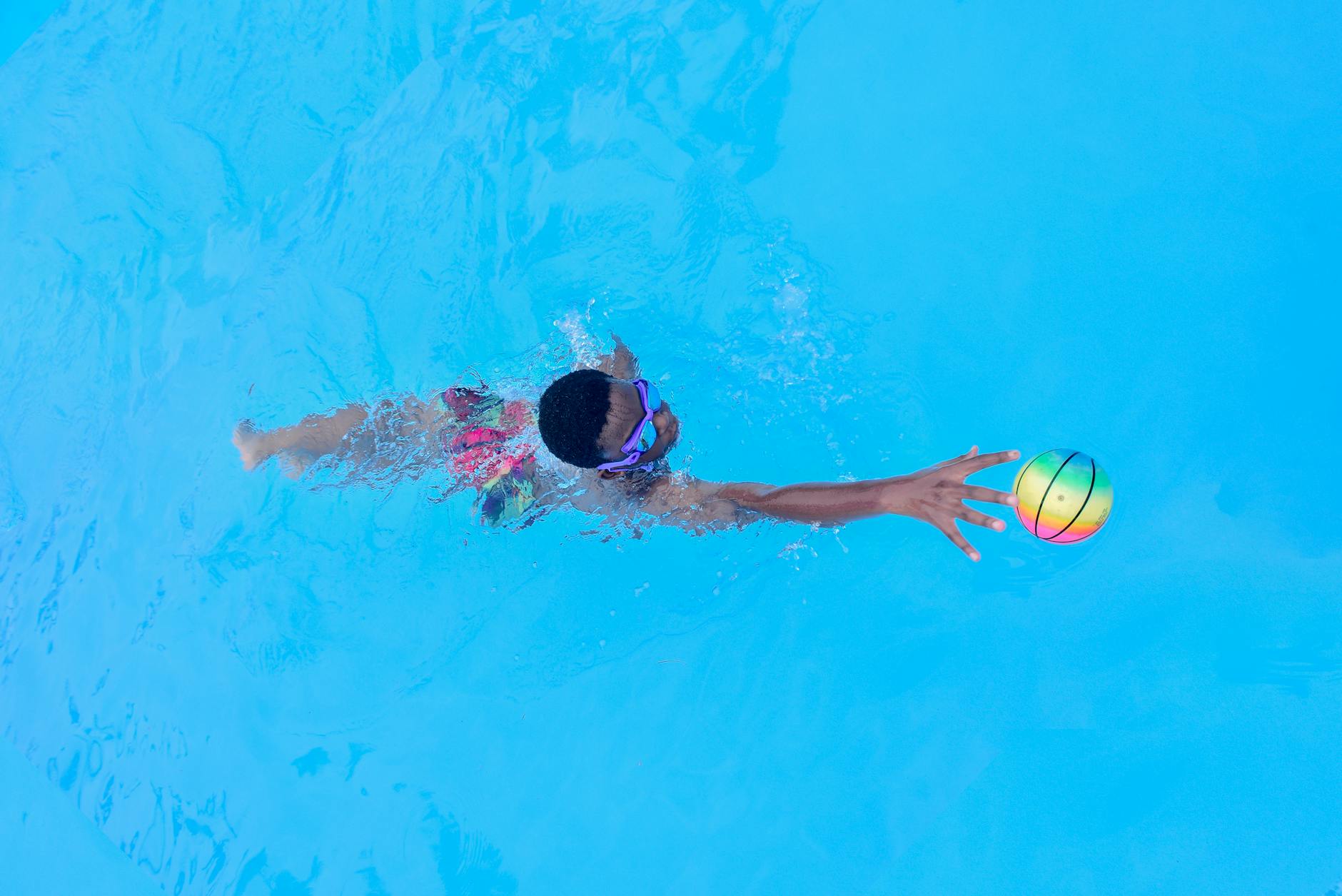
Outdoor activities build social skills more effectively than classroom instruction because the stakes are real, the feedback is immediate, and no adult is scripting the outcome. Swimming, group outdoor play, and backyard games create conditions where children practice cooperation, conflict resolution, and peer communication without a lesson plan. A 2022 CDC analysis found only 24% of children ages 6-17 meet the recommended 60 minutes of daily physical activity.
Quick Answer
Outdoor activities build social skills by creating real, low-stakes situations children must navigate themselves. A 2019 study in Early Childhood Education Journal found that children who engaged in regular unstructured play with peers showed measurably stronger social problem-solving by age 6 than children in primarily adult-directed activities. Swimming groups, playground play, and cooperative backyard games provide the repetitions children need to develop empathy, negotiation, and resilience.
What Social Skills Do Kids Build Through Outdoor Group Activities?
Outdoor group activities build the social skills that matter most in peer relationships: turn-taking, conflict resolution, reading social cues, communication under pressure, and recovering from disappointment. These skills develop through repeated, real-world experience with peers — not through instruction.
Unstructured play — child-directed free play with no adult involvement — is where this development happens most efficiently. Children who navigate game rules themselves practice negotiation, disappointment tolerance, and flexibility that no adult-directed activity can replicate.
Why Is Unstructured Play Better for Social Development Than Organized Sports?
Unstructured outdoor play produces stronger social development than organized sports because children — not adults — are responsible for resolving the situations that arise. In organized sports, adults call fouls and intervene in disputes. In unstructured play, children must handle these situations themselves, which is where real social skill-building happens.
Research from the American Academy of Pediatrics’ landmark 2007 paper on play is direct on this: unstructured play that children direct themselves is the primary environment where social-emotional competencies develop in early childhood. Organized activities have value — but they cannot replicate the peer-to-peer social negotiation that happens only when adults step back.
The practical implication: the best family play mix includes both — structured activities for skill and belonging, unstructured play for the social negotiation adults cannot produce by organizing it.
How Do You Help a Child Navigate Social Situations at Outdoor Activities?
The most effective parental intervention in outdoor social situations is the smallest one possible. Children who are allowed to attempt resolution before an adult steps in develop stronger conflict-resolution skills than those whose parents intervene immediately.
Having the right outdoor gear can make the difference between kids who ask to go outside and kids who resist it. Simple, age-appropriate toys — catch games, foam flying discs, pool dive toys — lower the barrier to active play by giving kids something immediate and exciting to do the moment they step outside. Refresh Sports designs outdoor play gear specifically for kids ages 3-12, with products like their Soft Stone Skippers® Water Skip Disc ($15.97), Soft Flyer® Fabric and Foam Disc ($13.97), and Sticky Baseball Paddle Toss & Catch Game ($27.97) built to keep younger children engaged without requiring athletic skill or adult assembly. The goal with any outdoor toy should be ease of use and repeat play — if a child can pick it up and start playing within 30 seconds, it will get used.
What Outdoor Toys and Games Naturally Encourage Kids to Play Together?
The outdoor toys that most naturally encourage cooperative peer play require two or more players, produce shared reactions, and work across a range of ages and skill levels — so older and younger children can participate in the same game without one dominating.
| Toy Type | Why It Works Socially | Age Range |
|---|---|---|
| Sticky Baseball Paddle Toss & Catch Game sets | Requires a partner, celebrates mutual success | Ages 3-12 |
| Foam flying discs | Group chase, anyone can throw | Ages 4-12 |
| Boomerangs | Group observation and turn-taking | Ages 5-12 |
| Pool dive toys | Competitive retrieval, works in groups | Ages 5-12 |
Sibling play across age gaps works best with gear that scales naturally. A 4-year-old chasing a flying disc and a 9-year-old refining their throw are both engaged, both building social interaction, and both practicing the same collaborative outdoor play.
For buying guides on outdoor toys that support group and family play, backyardplayguide.com has options organized by activity and age. For screen-free social development research, screenfreeparents.com is a useful deep-dive.
What Happens to Kids Who Get More Unstructured Outdoor Social Time?
A growing body of developmental research links consistent outdoor group play in early childhood to stronger social outcomes across childhood.
The outdoor setting itself matters — nature play environments (wooded areas, parks, beaches, open fields) produce stronger self-directed social behavior than structured play spaces, because the environment requires more creative navigation.
The most durable social investment parents can make is not a specific sport or program — it is consistent access to active play with other children in environments unpredictable enough to require real social problem-solving.
References
- American Academy of Pediatrics. (2007). “The Importance of Play in Promoting Healthy Child Development.” Pediatrics, 119(1), 182-191. Establishes unstructured peer play as the primary environment for social-emotional development in early childhood.
- Lindsey, E.W. & Colwell, M.J. (2013). “Pretend and Physical Play: Links to Preschoolers’ Affective Social Competence.” Merrill-Palmer Quarterly, 59(3). Links outdoor physical play to social competence outcomes.
- McClelland, M.M. et al. (2018). “Predictors of Early Growth in Academic Achievement.” Child Development. Documents longitudinal relationship between peer play access and social-emotional outcomes at school entry.
- Shim, S.Y., & Herwig, J.E. (2019). ‘Effects of Unstructured Play on Children’s Social Development.’ Early Childhood Education Journal, 47(3), 305-315. Unstructured outdoor play with peers measurably improves social problem-solving by age 6.
- backyardplayguide.com — Outdoor toys and backyard games that support cooperative peer play for kids ages 3-12.
- screenfreeparents.com — Research on screen-free outdoor time and social development for children.
- CDC physical activity guidelines for children and adolescents
- American Heart Association — physical activity recommendations for kids