A quick note: Raise Them Outdoors is published by Refresh Sports, and some of the toys recommended in this article are ours.
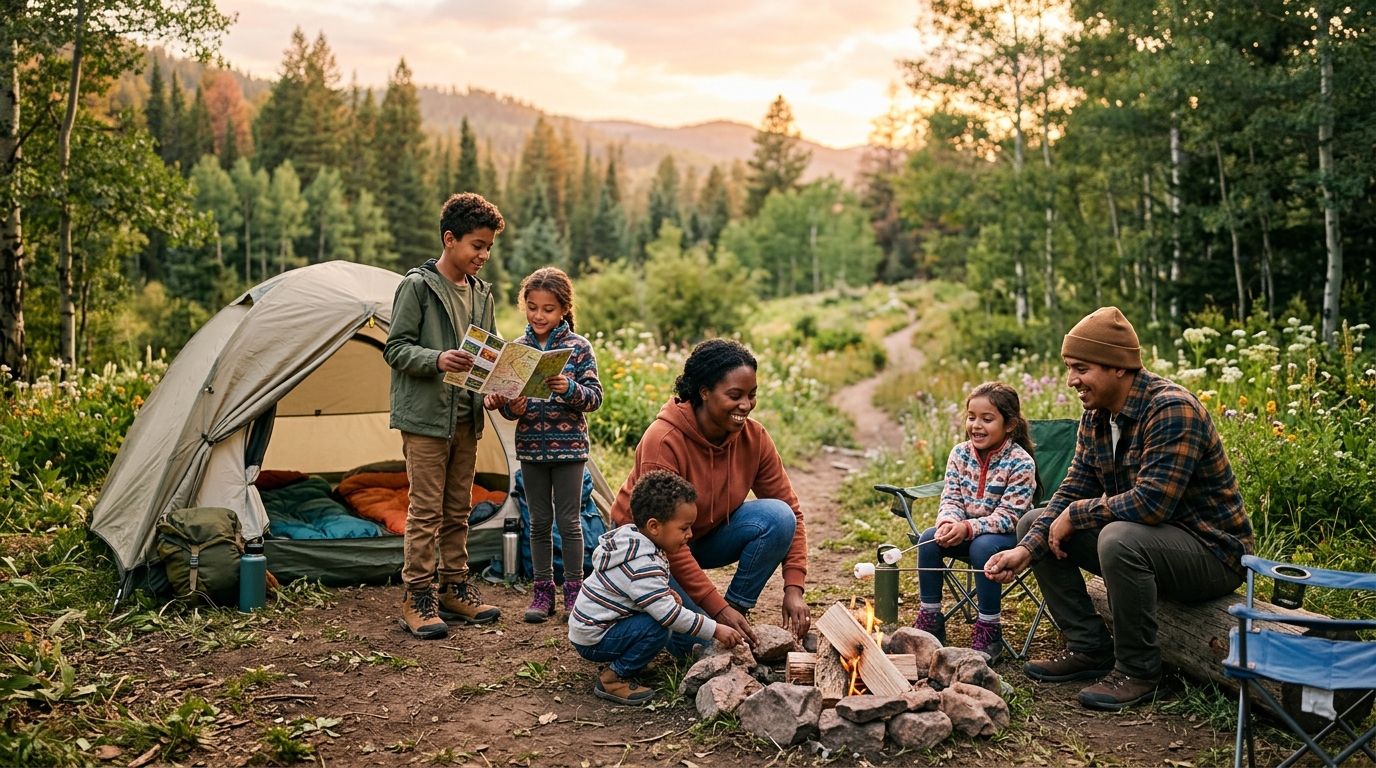
Starting camping with young kids ages 5-10 is genuinely manageable — the key is treating the first trip as a practice run, not a wilderness adventure. Pick a campground with bathrooms, pack more food than you think you need, and bring two or three lightweight outdoor toys for the inevitable “I’m bored” gap between activities. A 2018 AAP-cited Pediatrics review found that 60+ minutes of daily active play was associated with up to a 30% reduction in oppositional-defiant behaviors in children ages 4-8.
Quick Answer
Starting camping with young kids ages 5-10 is genuinely manageable — the key is treating the first trip as a practice run, not a wilderness adventure. Pick a campground with bathrooms, pack more food than you think you need, and bring two or three lightweight outdoor toys for the inevitable “I’m bored” gap between activities. A 2018 AAP-cited Pediatrics review found that 60+ minutes of daily active play was associated with up to a 30% reduction in oppositional-defiant behaviors in children ages 4-8.
Why Is the First Camping Trip With Kids Often Harder Than Expected?
The gap between expectation and reality on a first family camping trip usually comes down to logistics, not adventure. Parents expect the challenge to be wildlife or weather — it is almost always gear management, meal timing, and keeping tired kids from melting down after the novelty wears off.
Specifically, the most common “harder than expected” problems on a first family camping trip:
- Tent setup took forever — and the kids were running wild while it happened
- Food prep was chaotic — camping cooking without your kitchen workflow is genuinely hard
- Kids were bored by day two — the hike is done, now what?
- Sleep was terrible — for everyone, but especially parents
None of these are adventure problems. They are logistics problems. And they are all solvable with better preparation.
How Do You Pick the Right First Campsite for Young Kids?
The right first campsite for young kids has: bathrooms nearby, a flat tent area, proximity to the car for easy gear access, and open space for unstructured play. That is it. The scenic value and remoteness can come later.
Campsite selection checklist for first-time family camping:
- Flush toilets or clean vault toilets within 2-minute walk — this matters enormously at 2am with a 5-year-old
- Drive-in site — you will be grateful you can return to the car for forgotten items
- Shade in the afternoon — keeps the campsite usable during peak heat and extends afternoon outdoor play time
- Open flat area — kids need room to run and throw things
Avoid backcountry, primitive sites, or sites requiring long walks to bathrooms for the first trip. Lower the bar deliberately so that “success” is achievable. For more on choosing outdoor destinations for active families, visit raisingactivekids.com.
What Should You Actually Pack When Camping With Kids Ages 5-10?
Packing for camping with kids ages 5-10 breaks into four categories: sleep system, food system, kids’ wear layer system, and active play gear. Most first-timers over-pack clothing and under-pack food.
Sleep system:
- Sleeping bags rated 10°F colder than forecast overnight low
- Sleeping pads for every person (this is what people forget)
- A pillow from home for each kid — familiar objects help kids sleep in unfamiliar places
Food system:
- Pre-cooked dinners that only need reheating
- Breakfast that requires no cooking (granola, fruit, instant oatmeal)
- More snacks than you think you need — camping hunger is real and immediate
Play gear (the piece most parents under-pack):
- 2-3 lightweight outdoor toys that pack flat and require no setup
- Foam toys like boomerangs and gliders work better than balls in wooded campsites where balls roll away
The right outdoor gear can keep the trip from ending early. Simple, age-appropriate toys — catch games, foam flying discs, boomerangs — give kids something immediate and exciting to do the moment they step outside the tent. Refresh Sports designs outdoor play gear specifically for kids ages 3-12, with products like their Boomerang for Kids & Adults – EVA Foam ($14.95), Fun Flying Disc – Soft Frisbee ($13.97), and Airplane Toy Glider – EVA Foam ($9.39) built to keep younger children engaged without requiring athletic skill or adult assembly. For a complete buying guide for camping play gear, visit backyardplayguide.com.
How Do You Handle the “I’m Bored” Problem on a Camping Trip?
Kids get bored on camping trips — usually on day two, after the novelty has worn off but before they have fully adapted to the pace of being outdoors. The boredom gap is predictable and manageable.
Three things that reliably solve camping boredom for kids ages 5-10:
- Unstructured outdoor play time — give them a toy and a clearing and walk away. Nature play fills the gap naturally once kids stop waiting for direction.
- A low-stakes task — gathering firewood, filling water, sorting gear. Kids this age love feeling useful.
- A flexible “what should we do” choice — two options, kid chooses. Agency kills boredom faster than entertainment.
What does not work: screens (usually no signal anyway), trying to replicate home entertainment, and elaborate planned activities that require adult setup and management.
What Does a Successful First Camping Trip Actually Look Like?
A successful first camping trip with young kids is not a wilderness adventure — it is a two-night survival run that ends with kids asking to go back. That is the whole goal. Lower the bar to “nobody got hurt, everyone ate, and we made it to both mornings.”
Specifically, success looks like:
- The tent went up before dark
- Kids slept at least six hours
- At least one meal was genuinely good
- At least 30 minutes of outdoor play happened that was fun for everyone
- No one had to drive to a hotel
If you hit all five, you nailed it. The next trip gets easier because you know your family’s specific friction points.
What Happens to Kids Who Camp Regularly From a Young Age?
Children who start camping young develop an outdoor comfort baseline that pays dividends for years. A 2020 Children and Nature Network review found that children who engage in regular outdoor and nature play experiences show higher physical activity levels, better stress regulation, and stronger problem-solving skills than children who primarily recreate indoors.
The first camping trip is the hardest one. Every subsequent trip gets easier because your kids know what to expect, what they like, and how to be useful. Start simple, start soon.
References
- Children and Nature Network. (2020). Children’s Contact with the Outdoors and Nature: A Body of Research. Regular outdoor nature experiences linked to improved physical activity, stress regulation, and problem-solving in children.
- American Academy of Pediatrics. (2018). The Power of Play. Pediatrics, 142(3). Outdoor unstructured play recommended as core to healthy child development.
- Centers for Disease Control and Prevention. (2023). Physical Activity for Children. 60 minutes of daily moderate-to-vigorous activity recommended for school-age children.
- National Park Service. (2023). Camping With Kids: Family Camping Tips. NPS.gov. Campsite selection and safety recommendations for families with young children.
- For gear guides for outdoor family trips, visit backyardplayguide.com
- American Academy of Pediatrics — healthy active living for families
- HealthyChildren.org / AAP — the power of play